Case studies

What finding it early is worth

Real jobs for housebuilders and contractors, anonymised. What we found, when we found it, and what it would likely have cost to put right if it had been found the usual way: on site, after it was built.

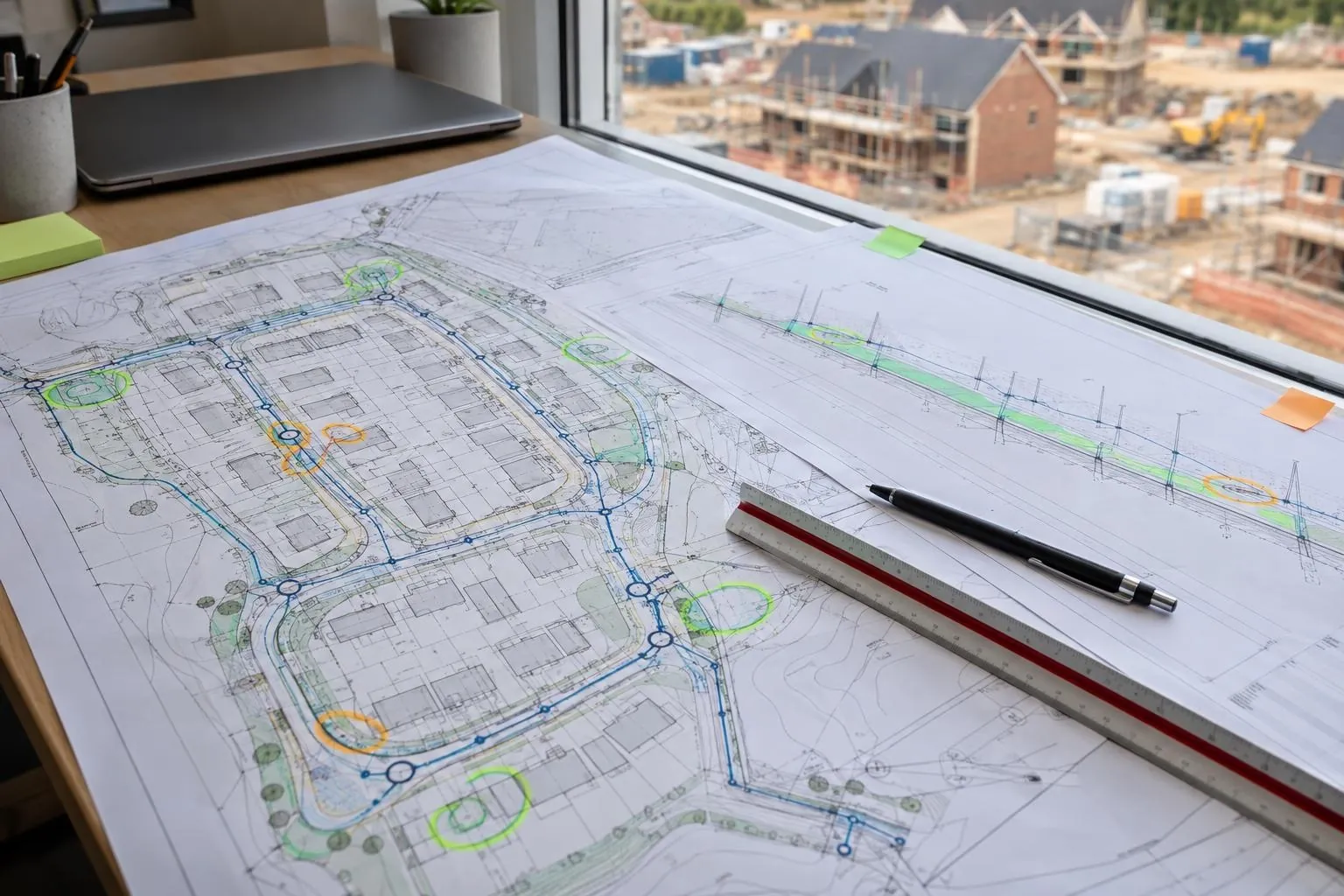
Groundworks drainage and levels drawings marked up with highlighted problem areas on a site office desk

Case studies

How we present savings

Every figure is a potential saving: the estimated cost of putting the problem right at the stage it would normally have been found, less what it cost to fix at the stage we found it. We show how each number is worked out, label estimates as estimates, and leave out costs we can't stand behind, such as programme delay, so the figures you see are the conservative ones.

Clients and sites are never named. Plans are simplified redrawings, not project drawings.

Questions we get asked

How do you work out the potential savings in a case study?

We estimate what each problem would have cost to put right at the point it would normally have been found, such as after the road was surfaced or after homes were occupied, using typical UK rates for labour, plant, materials, surfacing and traffic management. We then take off what the fix cost at the stage we found it. The result is shown as a potential saving because the later work never had to happen.

Why don't you name the clients or sites?

Our reports are confidential to the client. Each case study is anonymised: no company, site name, location, drawing numbers or plot numbers, and any plans are simplified redrawings rather than project drawings.

Book a scan or ask a question

Send the drawing, the location and when you need it. We reply the same working day with a fixed price.

Get a fixed price